Introduction
Here’s the truth: the way we craft scent is changing fast, and packaging is leading the sprint. Square perfume bottles sit at the center of this shift, as both style icons and supply-chain puzzles. Inside modern square glass perfume bottles factories, lines hum with sensors and dashboards, tracking every edge and curve. In many plants, data shows up to 18–25% of defects come from early-forming and finishing mismatches—tiny, but costly. So what do we do when elegance meets throughput, and both must win (no excuses)? Edge computing nodes now scan surfaces in milliseconds, while an MES guides the crew like a coach. But can technology fix the last-mile issues—microscopic chips, weight variance, cap misfit—without killing the art?
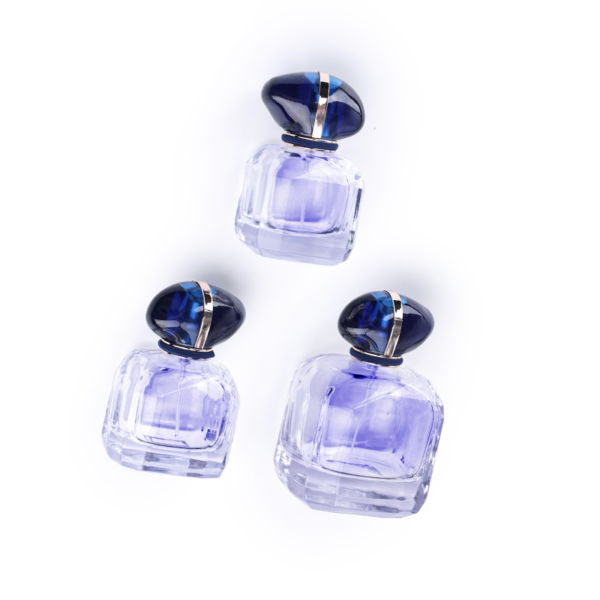
Let’s compare the old way and the new way, and see what really moves the needle.
Traditional Craft vs. the Quiet Costs You Don’t See
Where do traditional methods fall short?
Let’s get technical for a minute—because precision matters. Classic tooling and manual checks built the look we love, but they also hide slow leaks. A CNC mold wears unevenly; tolerance stack-up across mold halves nudges walls off-square by fractions. In the annealing lehr, heat profiles drift, and edges warp just enough to mess with the spray pump seal—funny how that works, right? Without live SPC, teams catch problems late, after pallets pile up. Look, it’s simpler than you think: small defects multiply. A tiny fin on one corner forces heavier grinding, which hazes the surface, which then needs re-polish, which increases cycle time. Meanwhile, power converters feeding older servo drives introduce slight variance in motion, and that variance shows up as inconsistent bottle weight. The craft is beautiful, but the hidden tax is real.
There’s also the fit-and-feel dilemma. Square shoulders demand uniformity for caps and collars to seat clean. Manual sampling can miss a trend shift for hours. When operators rely on visual checks under a single light angle, micro-chips hide on satin finishes. And rework? It steals margin. Without connected gauges and edge computing nodes on inspection belts, data stays siloed. The result is a nagging loop of scrap, touch-ups, and customer returns that never make the brochure. This is where disciplined digitization—not more overtime—starts winning.
Smart Lines, Sharper Edges: Principles That Change the Game
What’s Next
Now the forward look. The leading plants fuse machine vision with rule-based geometry checks on every bottle face—and they do it inline, not at the end. A digital twin mirrors the mold and the cooling curve, predicting wall-thickness drift before it shows up in the rack. When the twin flags a risk, a micro-adjust lifts temperature in one zone and trims air on another, keeping corners crisp. The principle is simple: sense early, correct faster. Add RFID trays to trace each cavity, and you link defects back to a single mold seat within minutes. Even UV coating lines tie into the MES, so surface energy and adhesion get logged against each run. That means less guesswork, more control. For buyers looking at square glass perfume bottles wholesale, this consistency shows up as fewer cap fit issues and tighter weight bands—exactly what downstream filling lines love. And yes, cycle time drops while quality rises—Look, it’s simpler than you think.

Let’s keep it semi-formal and practical. Compared with traditional sampling, edge computing nodes at the cold end do the heavy lifting in real time. Machine vision maps micro-chips on corners; SPC closes the loop; the MES feeds dashboards so supervisors act, not react. We just compared the old to the new: the old hides waste, the new exposes it and fixes it. So how do you choose partners and systems? Use three metrics that don’t lie: one, first-pass yield across cavities, not just averages; two, cap-torque compatibility and leakage rate after 24-hour thermal cycling; three, traceability depth down to cavity, shift, and coating batch. Meet these, and you protect both brand feel and line speed—no drama. Advisory note: technology should enhance the craft, not erase it. That balance is the real edge, and it’s within reach—funny how clarity shows up when data does. Learn more from teams who build for both style and scale at NAVI Packaging.